
Industry solution · MOVE
Smart transport
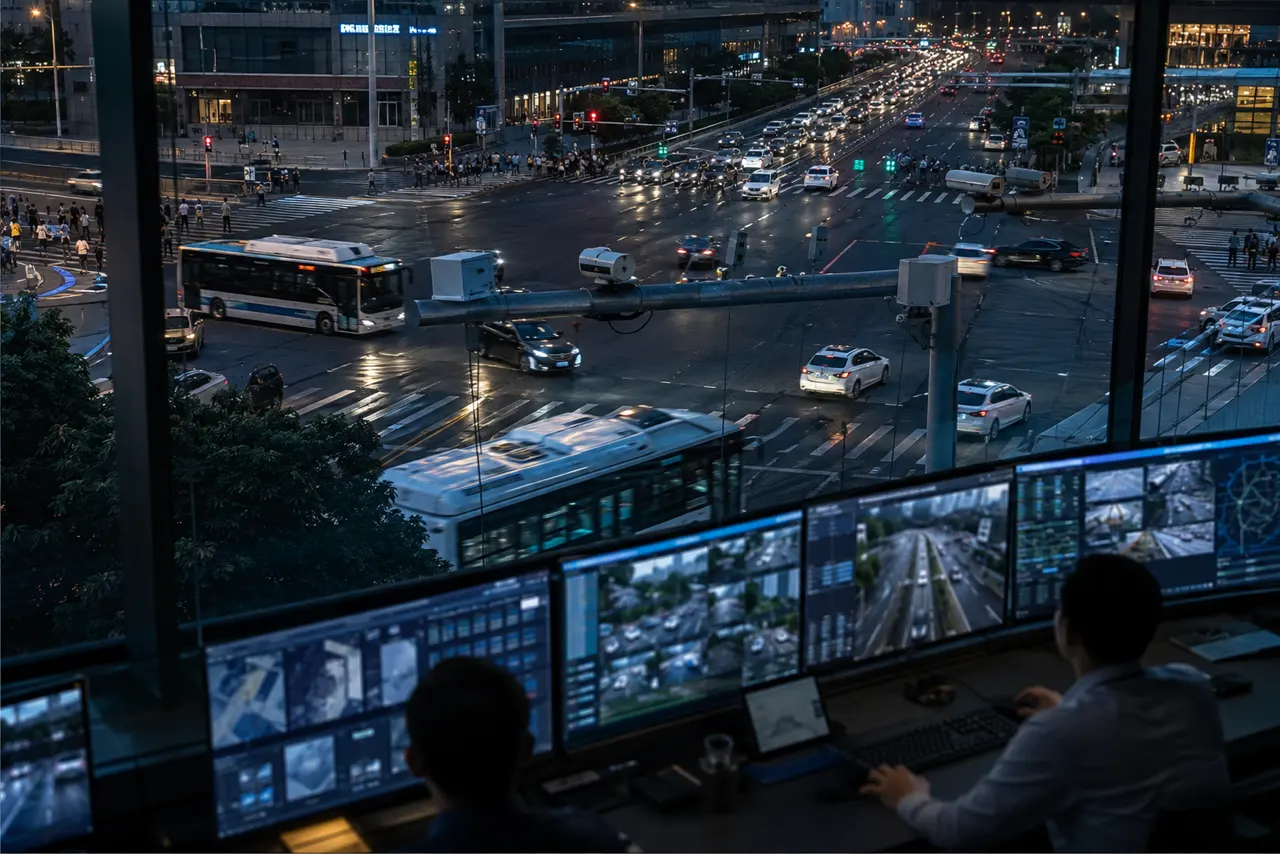
Fuse video, radar, signals, vehicle and road-environment data to assess congestion, incidents, parking violations, waterlogging and passenger flow, then feed signal, guidance and response workflows.
20-second walkthrough
From field context to operational closure
The sequence explains the solution through sensing, data flow, intelligence and operational action.
Intersection congestion and incident detection
- 01Intersection congestion and incident detection
- 02Video, radar, signals and vehicle terminals → Roadside edge fusion
- 03Traffic objects and spatiotemporal model → Incident detection and flow forecasting → Signals, guidance, dispatch and public information
- 04Workflow integration → Continuous operations
Start with the operating problem
Define the objects, data, owners and response actions before selecting technology, so the platform becomes an operating system rather than an isolated display.
Intersection congestion and incident detection
Bus, terminal and passenger-flow dispatch
Parking resources and road-risk management
Reference system architecture
Every layer has explicit inputs, outputs and ownership boundaries, and can connect to existing equipment and systems in phases.
Build a sustainable operating loop
Go-live is the beginning. Business review and continuous evaluation keep rules, data and models aligned with changing field conditions.
- 1
Field discovery
Confirm assets, data sources, network limits, permissions and current processes.
- 2
Scoped validation
Use representative samples to set a baseline for errors, latency and usability.
- 3
Workflow integration
Connect alerts and insights to work orders, approval, dispatch and review.
- 4
Continuous operations
Monitor quality and drift while retaining versions, audit records and rollback.
Accept against verifiable measures
These are recommended acceptance dimensions, not unverified performance claims. Targets must be set from the site baseline, sample tests and business risk.